Natural flavor filtration is a critical step in the production and refinement of aromatic extracts derived from plant- or animal-based raw materials. Its purpose is to remove impurities, particles, and unwanted residues in order to obtain a clear, homogeneous, and stable flavor. This process plays a key role in preserving the organoleptic quality and purity of the products, while ensuring compliance with sanitary requirements. When properly carried out, filtration preserves the full authenticity of the natural flavor profile. It is therefore an essential step between extraction and final formulation.
Flavor Production
Flavors, industrially produced since the 19th century, are an integral part of packaged products, food, and many consumer goods. Their source may be natural—derived from spices, fruits, vegetables, or similar materials—or artificially created through a series of chemical reactions.
The strong demand for ready-to-eat foods, combined with increasing demand for natural and organic ingredients—widely perceived by consumers as safer or superior to synthetic alternatives—has significantly increased the demand for flavors. Compared to artificial flavors, natural flavors are generally more expensive and more susceptible to supply disruptions due to climate conditions, disease, political factors, or economic instability.
Natural Flavors
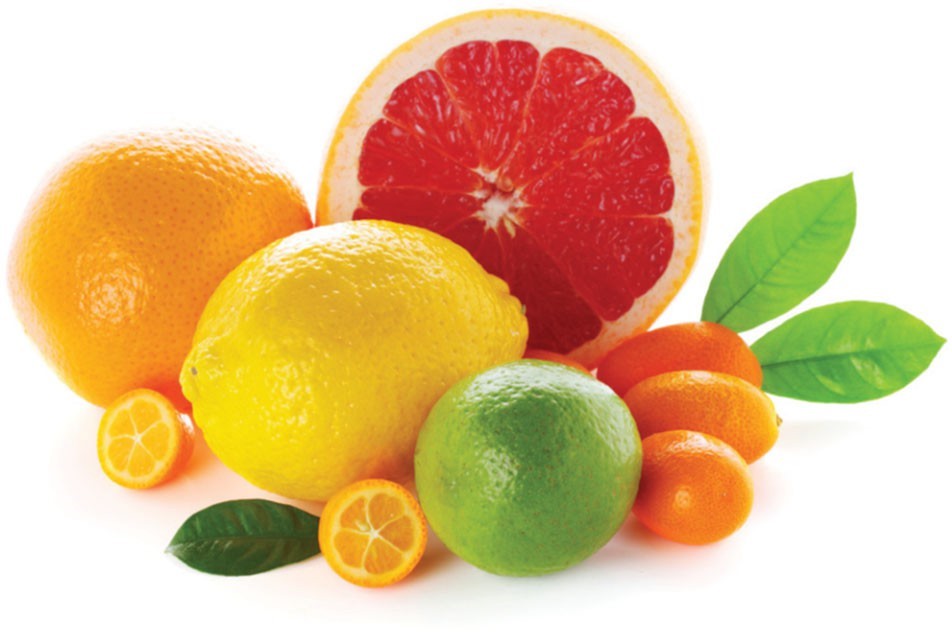
Natural flavors originate from a wide variety of plants, animals, fungi, and microorganisms. Aromatic compounds typically represent only a small fraction of the source material, usually less than 1%—and sometimes much less—of the total weight. In some cases, these compounds are available at a high level of purity (such as orange oil extracted from citrus peels), while in other cases they are only present in low concentrations within the raw material.
The industry must therefore concentrate these components using processes such as distillation, CO2 extraction, low-temperature vacuum distillation, solvent extraction, and filtration. Microorganisms may also be used to produce traditional flavors by fermenting natural substrates to generate aromatic compounds, which are otherwise difficult to isolate from natural sources or only accessible through synthetic organic chemistry techniques. The processes used to produce flavors often generate high levels of particles, either originating from the raw material or resulting from process aids such as activated carbon or diatomaceous earth. The complexity of these compounds can also lead to the formation of haze-forming particles that must be removed before packaging.
Solids may be soft and deformable, making the retention process more complex, as they can pass through filters. Compatibility is also a key factor to consider, as many chemicals used in extraction are solvent-based. Flavors themselves can be aggressive in nature, such as citrus-derived terpenes.
The selection and use of filtration is therefore essential to produce high-quality, particle-free flavors used in a wide range of products such as soft drinks, water, tea, confectionery, and even pharmaceutical ingredients.
Filtration Solutions
The chemical composition of the process often requires the use of a polypropylene filter media. However, standard pleated polypropylene media do not have sufficient depth to effectively capture deformable particles.
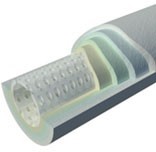
100% thermally bonded polypropylene cartridges are filtration elements designed to provide excellent chemical and mechanical resistance. Manufactured without adhesives or binders, they ensure full media integrity and eliminate any risk of extractables. Their thermally bonded structure offers high stability, even under demanding operating conditions (temperature, pressure, aggressive fluids). They deliver reliable and consistent filtration, with strong particle retention capacity. As polypropylene is an inert material, these cartridges are compatible with a wide range of industrial and food processing applications. Durable and cost-effective, they represent a high-performance solution to optimize filtration quality while reducing maintenance costs.
Although these filters provide excellent flow rates and retention performance, pleated filters offer even higher flow rates, which are often essential to meet system sizing constraints or processing time requirements.
Absolute pleated cartridges feature a unique porosity gradient based on a hybrid design combining pleated and depth filtration. This innovative structure provides a large filtration surface along with excellent retention capacity while maintaining high flow rates. They are particularly suitable for the filtration of viscous products, such as gels and agglomerates.
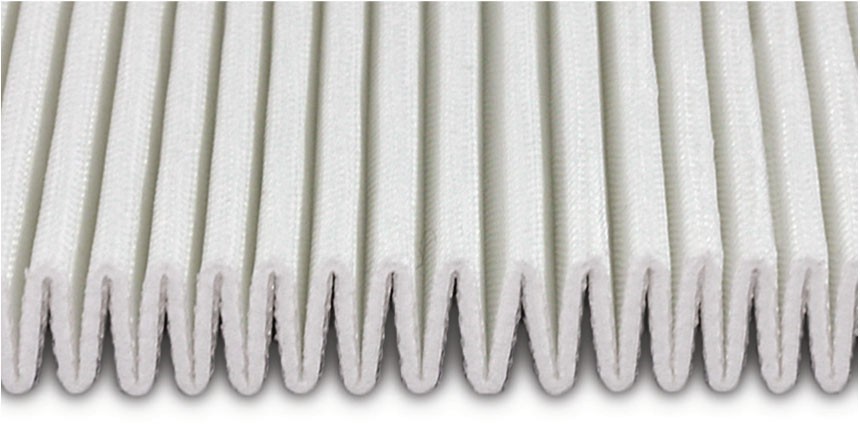
Microfiltration cartridges have limitations in applications with high solids content, which may occur in flavor processing. In such cases, technologies such as plate and frame filters, possibly using a diatomaceous earth precoat, may be used, although they are complex to install and clean.
Objectives & Challenges of Filtration
Filtration aims to clarify and purify the extracted natural flavor.
It enables in particular:
- Removal of solid particles (plant residues, fibers, impurities);
- Separation of unwanted phases (oil/water, sediments);
- Improvement of microbiological and physico-chemical stability;
- Ensuring a clear appearance and consistent flavor in the final product.
The technological and sensory challenges of natural flavor filtration are numerous and critical for final product quality:
- Preserving aromatic integrity: overly fine filtration may remove volatile compounds responsible for taste and aroma.
- Preventing oxidation: improper exposure to air or light can degrade sensitive compounds.
- Ensuring reproducibility: controlled filtration guarantees consistent quality from batch to batch.
In addition, for natural flavors (under European Regulation EC No. 1334/2008), filtration is considered an authorized physical process, provided that:
- It does not alter the nature of the product;
- It does not involve synthetic solvents;
- It complies with the definition of a “natural” flavor (≥95% derived from natural ingredients).
For example, in the production of a natural vanilla extract, after alcohol maceration:
- Filtration removes pods and fine particles.
- Microfiltration produces a clear liquid without affecting aromatic notes such as vanillin, ethyl vanillin, or other volatile compounds.

Contact a filtration expert
We are at your service
Our experts place their knowledge and expertise at your disposal for liquid filtration, air and gas filtration, decontamination, and separation technologies.